
It is for the first time that a senior minister has said that Iran requested permission for docking three of its ships in Indian ports.

For weeks, the war skirted the edge of catastrophe without tipping over. Missiles flew, there was much destruction, commanders were assassinated, cities across the Gulf and even in Israel struggled to absorb the shock. But one line held: Energy infrastructure, the arteries of the global economy, remained largely untouched. That is no longer true. Prem Panicker continues his must read daily blog on the Gulf War.

The question is no longer whether the war will expand. It has. The next few days will tell us whether the war stabilises around Hormuz or whether the Strait itself becomes the trigger for a far larger rupture. What to watch for over the next 48 hours is simple: Any move by the US toward direct naval control of the Strait; any credible Iranian attempt to disrupt or mine shipping lanes and, critically, whether energy infrastructure in the Gulf continues to be targeted.If those lines are crossed in tandem, the war will no longer be containable within the region.

'The entire US ecosystem built over decades at the bases in the Gulf region, especially the UAE, costing trillions of dollars have been decimated, dealing a mortal blow to the US Central Command's war capability,' points out Ambassador M K Bhadrakumar.

The United States, which entered this war in expectation of a short, sharp win along the Venezuela model, is now preparing for deeper involvement in a conflict it does not fully control, without the allies it typically relies on, against an adversary that is not behaving as expected, in a global environment that is already absorbing economic shock. Prem Panicker continues his must read daily blog on the Gulf War.

Following the seizure, Moscow issued a strong condemnation asserting that no country has the right to use force against vessels lawfully registered under another state's jurisdiction, particularly on the high seas.

When everyone has footage and no one can verify it, the loudest voice wins, notes Prem Panicker who begins a daily blog on the War in the Middle East.

From founding fathers to Europe's most unyielding rulers, these figures have not just held office, they have established a cult of leadership and will leave legacies, mostly mixed, that few can rival.

'To suddenly give the impression of taking a position that is hostile to Iran, or, at least, not friendly to Iran, is not a good thing.'

In 2025, India launched Operation Sindoor, a multi-domain combat mission against Pakistan in response to cross-border terrorism. The operation involved precision strikes, military retaliation, and diplomatic measures, marking a significant shift in India's security policy.
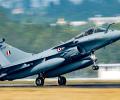
The Indian Defence Ministry has approved the procurement of 114 Rafale fighter jets from France, a significant step towards bolstering the Indian Air Force's combat capabilities. The decision comes ahead of French President Emmanuel Macron's visit to India.

The government has approved the construction of two indigenously designed nuclear attack submarines and is expected to ink contracts next month to procure 26 naval variant of Rafale jets and three Scorpene submarines, Navy Chief Admiral Dinesh Tripathi said on Monday.
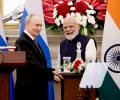
Russia, being bogged down by the Ukraine war and prioritising the requirements of its own armed forces, along with India's consistent diversification policy, will remain a major challenge to the bilateral partnership, note Harsh V Pant and Aleksei Zakharov.
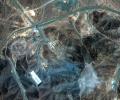
The US attack on the Iranian nuclear facilities has triggered fears of a wider regional conflict, with many leading countries and blocs calling for restraint.

China supplied more than $20 billion worth of arms to Pakistan. These include 20 J-10CE and JF-17 Block III fighter aircraft, Wing Loong drones, frigates, submarines, Hongqi HQ-9P surface-to-air missiles, 240 PL-15E air-to-air missiles, LY-80 air defence systems, ZDK early warning aircraft and other weapons.

During Operation Sindoor, Indian naval ships, submarines and aircraft were operationally ready and deployed, projecting strength and preparedness to deter any "potential actions from our western adversary" in the maritime domain, Navy chief Admiral Dinesh K Tripathi said on Friday.
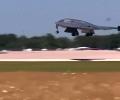
The aircraft, part of the US air force's 509th Bomb Wing, reportedly dropped 14 massive 30,000-pound bunker-buster bombs on two major underground uranium enrichment sites in Iran as part of Operation Midnight Hammer.

With the Indian Navy's requirement of conventional submarines standing at 24, there is critical need to expedite the planned acquisition of six more conventional submarines.
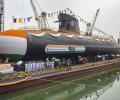
The status of the current submarine force level is alarming and we need to address the threat perceptions expeditiously. Critical decisions pertaining to national security cannot be delayed any further due to the rapidly changing maritime threat perceptions and growing strategic importance of the Indian Ocean region, asserts Commodore Venugopal Menon (retd).

Hydrography (underwater geography) prevents the Indian Navy for opting for an all-conventional, or all-nuclear submarine fleet.
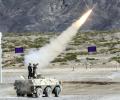
The Chinese military Thursday declined to comment on the performance of China-made weapons used by Pakistan in the recent conflict with India.
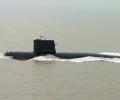
Pakistan will acquire at least eight modified diesel-electric attack submarines from China by 2028 in a nearly $5 billion (Rs 33,479 crore) agreement, said to be the biggest arms export deal for the Communist giant.
India needs to be technologically and militarily prepared to defend itself from both Pakistan and China, alerts Ramesh Menon.

INS Tamal is the eighth Krivak class frigates to be inducted from Russia over the past two decades.

Indian Navy's carrier battle group, submarines and aviation assets were immediately deployed at sea with full combat readiness in the aftermath of the Pahalgam terror attack, a top Navy official said on Sunday.

A new book details how a German submarine torpedoed the ship carrying B.R. Ambedkar's PhD dissertation and a vast collection of books during World War I. This setback did not deter the Dalit icon and architect of India's Constitution, who went on to earn multiple doctorates.
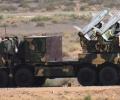
When the technology gap between China and India will remain large, cost-effective hardware of the kind that proved their worth in Operation Sindoor should be our priority, points out R Jagannathan.
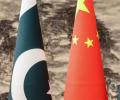
The Chinese military on Monday denied reports that its largest military cargo plane has carried arms supplies to Pakistan and warned legal action against those spreading such rumours.

In a Truth Social Post, Trump said, "This cannot continue. There will be either peace or there will be tragedy for Iran far greater than we have witnessed over the last eight days."
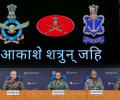
The Indian Air Force on Monday said all its military bases and systems continue to remain fully operational, and ready to undertake any further missions if the need arises.

Trump has a major decision to take in coming days -- specifically, how to rescue Israel from the attritional war that lies ahead, points out Ambassador M K Bhadrakumar.
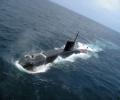
In what would be a major boost for the submarine building capability within the country, the first three nuclear attack submarines to be built indigenously would be having 95 per cent 'Made in India' content in them and it would further go up in the next three.
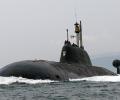
Building 6 conventional submarines is one of the Indian Navy's most important weapon construction programmes.

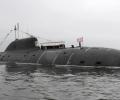
According to Russian journal Vedomosti, the agreement was made when Prime Minister Narendra Modi met Russian President Vladimir Putin in Goa BRICS summit.

The Indian military also acknowledged suffering some losses but declined to provide the details as the operations are going on.

Vagir is part of the six Kalvari-class submarines being built in India.

Khanderi is the second of the Navy's six Kalvari-class submarines built in India. It is a diesel-electric attack submarine which is designed by French naval defence and energy company DCNS which is being manufactured at Mazagon Dock in Mumbai.

In a year bookended by intractable conflicts and geopolitical fragmentation, India focused on ramping up military prowess by broadly firming up defence procurement worth Rs 4.22 lakh crore even as Indian and Chinese militaries completed pulling back their troops from border face-off points in eastern Ladakh.

Here are the glimpses of the submarine.
